

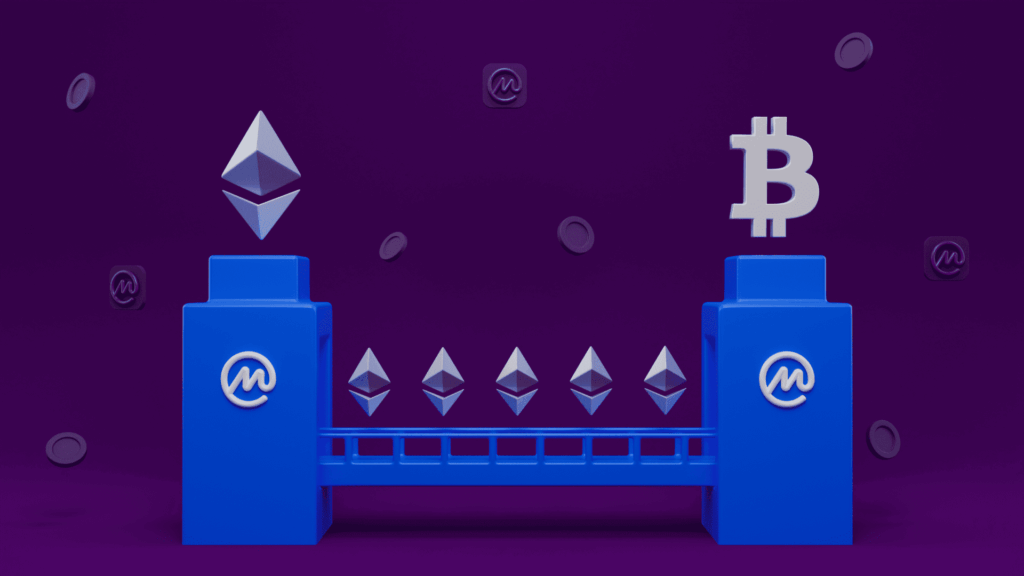
Crypto bridges are tools that help you move the value of tokens between blockchains (for example, from Ethereum to BNB Chain). Blockchains don’t naturally “talk” to each other, so a bridge acts like a connector: it confirms something happened on one chain and then delivers an equivalent on another chain. This solves a big practical issue in crypto: liquidity is split across many networks.
What Is a Crypto Bridge?
A crypto bridge is infrastructure that lets you use your assets on a different blockchain by locking or depositing funds on the source chain and issuing or paying out an equivalent on the destination chain.
Important idea: tokens don’t “teleport”
Your tokens don’t physically move from Chain A to Chain B the way money moves between bank accounts. Instead, the bridge creates a controlled swap between chains:
- On the source chain: tokens are locked or deposited into a bridge contract/pool.
- Between chains: the bridge validates that deposit (using its verification/validator system).
- On the destination chain: the bridge issues a wrapped token or pays out real tokens from liquidity reserves.
Liquidity Fragmentation: The Root Problem
Crypto liquidity exists across many separate blockchains and L2s (Ethereum, BNB Chain, Arbitrum, Optimism, Polygon, etc.). Each network has its own apps (DEXs, lending, derivatives) and its own pools of capital. Because these networks are isolated, the same “kind” of asset (like USDC) ends up spread across many places instead of sitting in one unified pool.
What fragmentation causes in practice
- Higher slippage: smaller pools mean worse execution for larger swaps.
- Wider spreads: prices can diverge across chains.
- More friction: users can’t quickly move funds to where the best opportunity is.
- Slower growth: protocols can’t easily access liquidity sitting on other networks.
Why Blockchains Are Not Connected by Default
Each blockchain is a separate system with its own validators, rules, and state. By default, Chain B can’t reliably confirm what happened on Chain A. A bridge fills this gap by providing a method to verify cross-chain messages such as: “A deposit of 100 USDC happened on Ethereum for this user.”
How Bridging Works Step-by-Step (USDC Example)
Suppose you want to bridge 100 USDC from Ethereum to BNB Chain.
- Deposit / Lock on Ethereum: you send 100 USDC to the bridge contract (or pool) on Ethereum.
- Verification: the bridge’s system confirms that the deposit happened (this is a key trust/security point).
- Payout on BNB Chain: the bridge delivers an equivalent to your address on BNB Chain.
Two Main Bridge Designs
Model 1: Mint/Burn (Wrapped or Synthetic Tokens)
In this model, your original tokens are locked on the source chain, and the bridge mints a “bridge version” (wrapped token) on the destination chain. When you bridge back, the wrapped token is burned, and the original tokens are unlocked.
- What you receive: a wrapped/synthetic representation (a “claim token”).
- Main strength: less need for deep liquidity on every destination chain.
- Main risk: if the bridge is compromised and collateral is drained, the wrapped token can de-peg (lose its 1:1 value).
Model 2: Liquidity Network (Pools on Each Chain)
In this model, the bridge maintains real liquidity on each chain. When you bridge, you get real tokens from the pool on the destination chain, while your deposit replenishes or rebalances liquidity on the source side.
- What you receive: the “regular” token on the destination chain (from a pool).
- Main strength: avoids the specific “wrapped token de-peg” risk for the user.
- Main risk: if the pool/bridge contracts are exploited, liquidity providers (or the protocol treasury) can lose funds.
- Operational constraint: large one-way flow can drain pools, increasing fees or limiting transfers.
Comparison Table: Bridge Models
| Criterion | Mint/Burn (Wrapped) | Liquidity Network (Pools) |
|---|---|---|
| What you get on destination chain | Wrapped/synthetic token | Real token from pool |
| Primary failure mode | Collateral compromised → wrapped de-peg | Pool exploited or drained → losses for LPs/protocol |
| Liquidity requirement | Lower (collateral sits on source chain) | Higher (needs liquidity on each chain) |
| Capacity constraints | Often less constrained by pool depth | Often constrained by pool depth / imbalance |
| User experience | Fast, but depends on wrapped token acceptance | Fast, but can degrade when pools are imbalanced |
Incentives Table (LTV / Threshold / Bonus)
Some bridges (or apps that integrate bridges) run incentive programs to attract users and liquidity. The exact numbers and rules vary by platform, so the table below is a framework you can use to compare programs (not a claim about any specific bridge).
| Program Type | LTV Impact (How it can affect long-term value) | Threshold (What you must do) | Bonus (What you get) | Notes / Typical Caveats |
|---|---|---|---|---|
| First-Bridge Bonus | Medium | Complete your first bridge transaction | One-time reward (points/fee credit) | Often limited by chain/token; may require KYC in some cases |
| Volume-Based Rebates | High | Bridge above a volume tier within a period | Fee discount or cashback | Can encourage “wash routing”; check net costs (fees + slippage) |
| Referral Program | High | Invite users who complete eligible bridges | Referral share / fixed bonus | Usually has anti-fraud rules and payout delays |
| Liquidity Provider (LP) Bonus | Medium–High | Provide liquidity to bridge pools | Extra rewards on top of fees | LPs take smart-contract and pool-drain risk; not “risk-free yield” |
| Campaign / Quest Rewards | Low–Medium | Complete tasks across chains | Points, NFTs, or future eligibility | Often marketing-driven; assess whether it justifies transaction costs |
Risks and Trust Assumptions (Why Bridges Get Hacked So Often)
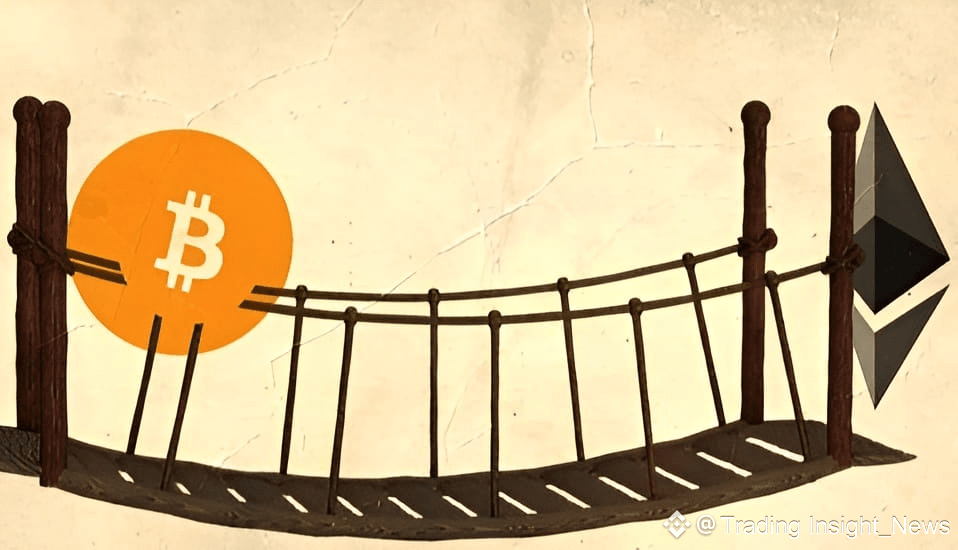
Bridges are frequent targets because they combine high value with complex cross-chain logic. Common risk sources:
- Key / multisig compromise: if critical signing keys are stolen, attackers can authorize fake releases or mints.
- Smart contract bugs: mistakes in message validation or accounting can allow unauthorized withdrawals.
- Weak verification: if cross-chain “proofs” are too trusting, deposits can be forged.
- Pool risk (Model 2): pools can be drained; LPs or protocol treasury eat the loss.
Checklists
Before You Bridge (User Safety Checklist)
- ☑️ Confirm the source chain and destination chain (most user errors happen here).
- ☑️ Verify the token you will receive on the destination chain (native vs wrapped version).
- ☑️ Start with a small test transfer if it’s your first time using that route.
- ☑️ Check fees + expected slippage (your real cost is not just “bridge fee”).
- ☑️ Make sure you have gas on both chains if required (or that the bridge covers it).
How to Evaluate a Bridge (Quick Due Diligence)
- Security track record: audits, incident history, and how issues were handled.
- Trust model: who/what approves cross-chain messages (validators, multisig, proof system).
- Concentration risk: how many keys/parties can move funds.
- Liquidity depth: for pool-based bridges, look at pool size and transfer limits.
- Token quality: whether apps/DEXs treat the destination token as “standard” or discounted.
After You Bridge (Verification Checklist)
- ✅ Confirm receipt on the destination chain in your wallet and on a block explorer.
- ✅ Check the token contract address to ensure it matches the expected version.
- ✅ Review approvals/permissions you granted; revoke unnecessary approvals later.
FAQ
1. Why did I receive a different-looking USDC (like “USDC.e”)?
That usually means you received a wrapped/bridged version of USDC (Model 1). It can trade at 1:1 most of the time,
but its safety depends on the bridge’s collateral and security.
2. Is receiving “real tokens from a pool” always safer?
It can be safer for the user in the sense that you avoid the wrapped-token de-peg risk, but it does not remove bridge risk.
Pools and bridge contracts can still be exploited, and liquidity can be drained.
3. Why is bridging sometimes expensive?
Total cost can include source-chain gas, bridge fees, destination-chain gas, and (for pool-based routes) slippage or liquidity imbalance costs.
4. Can I reverse a bridge transfer if I made a mistake?
Generally, no. Blockchain transactions are typically irreversible. Your best protection is careful chain/token checks and a small test transfer.
5. What’s the biggest risk for beginners?
The most common practical risk is sending on the wrong chain or receiving a wrapped token you didn’t expect.
The biggest systemic risk is bridge security (exploits).
6. Why are bridges attacked more than many other protocols?
Bridges combine large locked value with complex cross-chain verification and often rely on trusted components (validators/multisigs),
creating a high-reward target for attackers.