
Ripple is taking another step toward bridging traditional finance and decentralized markets. Through its institutional platform, Ripple Prime, the company has expanded its integration with Hyperliquid, enabling access to tokenized derivatives tied to real-world commodities such as gold, silver, and oil.
Ripple Prime Adds Support for HIP-3 Assets
The latest update introduces support for HIP-3 tokens, a category of on-chain assets that represent perpetual futures contracts linked to traditional commodities. This development allows institutional participants to gain exposure to real-world assets directly through decentralized finance (DeFi) infrastructure.
By incorporating these instruments, Ripple Prime is positioning itself as a gateway for institutions seeking to diversify beyond crypto-native assets while maintaining the efficiency and transparency of blockchain-based trading.
Institutional Access to Commodities via DeFi
According to Mike Higgins, Head of Business Development and Client Relations at Ripple Prime, the integration marks a meaningful advancement for institutional adoption. He emphasized that the inclusion of HIP-3 assets enables seamless access to traditional financial markets without leaving the DeFi ecosystem.
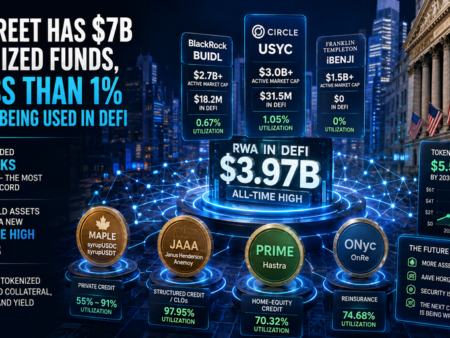
This move reflects a broader industry trend where decentralized platforms are increasingly offering exposure to real-world assets (RWAs), a sector that continues to gain traction among professional investors.
Unified Collateral Model Simplifies Trading
One of the key features of the integration is the introduction of a unified collateral system. This structure allows users to trade both cryptocurrency derivatives and commodity-based contracts within a single portfolio, eliminating the need to manage separate collateral pools.
Key benefits include:
- Streamlined portfolio management across crypto and traditional assets
- Improved capital efficiency through shared collateral
- Faster execution and reduced operational complexity
- Seamless transition between DeFi and TradFi exposure
DeFi Continues Its Push Into Traditional Markets
The addition of commodities trading via Hyperliquid highlights how DeFi platforms are evolving beyond their original scope. By integrating real-world assets, protocols are attracting a broader range of participants, including hedge funds, asset managers, and corporate treasuries.
This hybrid approach not only expands market opportunities but also strengthens the long-term relevance of decentralized infrastructure in global finance.
What This Means for the Market
Ripple’s latest move underscores a growing convergence between traditional finance and DeFi. As platforms continue to integrate tokenized representations of real-world assets, institutional adoption is expected to accelerate.
The ability to trade commodities like gold, silver, and oil alongside digital assets within a unified system could redefine how portfolios are structured in the coming years.
*This content is for informational purposes only and does not constitute investment advice.